



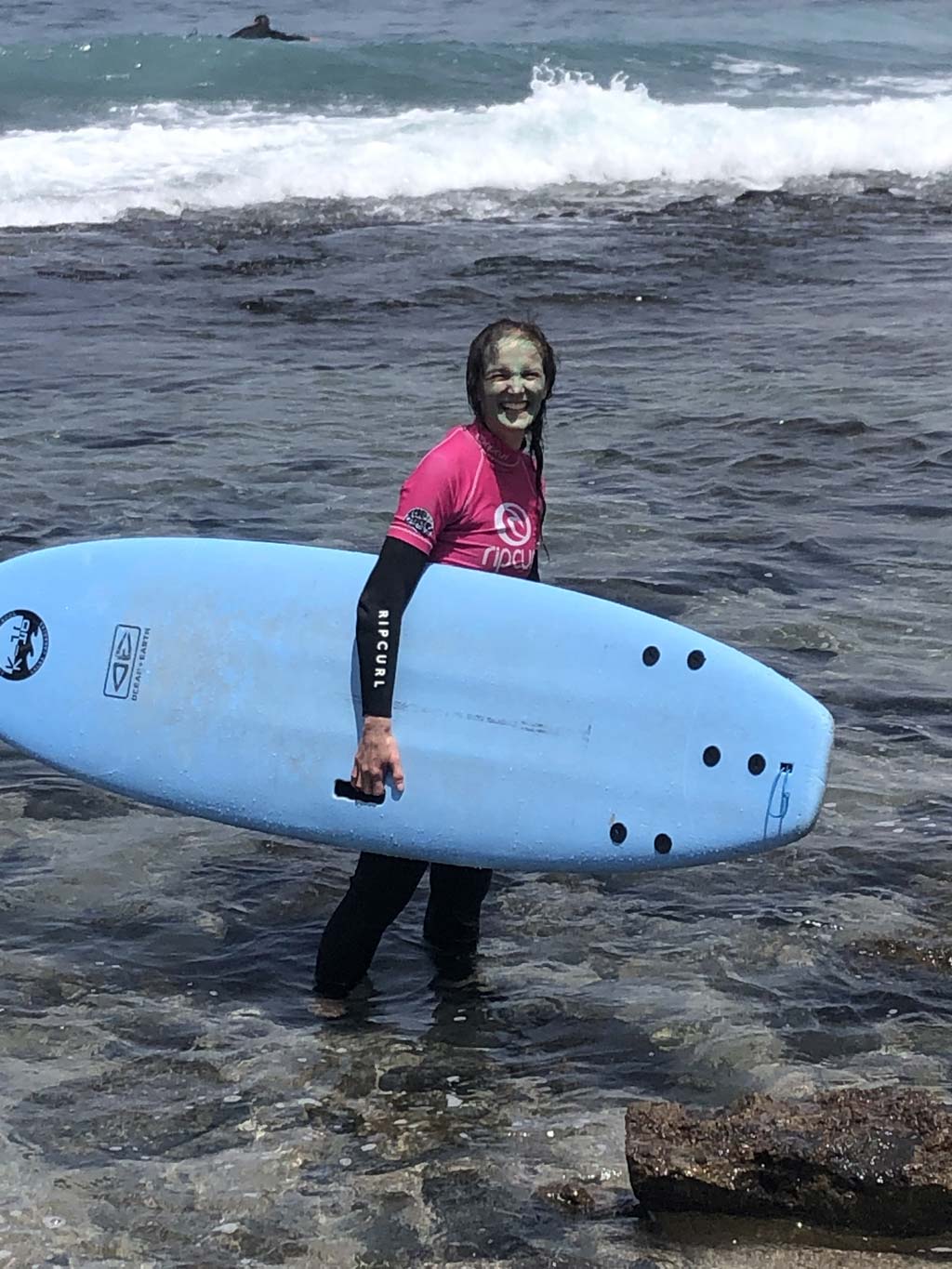
Valeria Fiocco
Federally recognized psychotherapist
My name is Valeria Fiocco, I’m 38 years old and I’m a psychologist and psychotherapist. I’ve always been passionate about people’s uniqueness and the opportunity to support them on their journeys of development, through times of change, crisis, or self-discovery.
Over the years, I have worked with children, adolescents, and adults, supporting them through life’s challenging transitions. I have also provided psychological assessments in specific contexts such as sports and television, where I have been able to explore individual resources and the most vulnerable aspects that are activated in highly exposed and emotionally charged situations.
I provide psychological diagnoses and individual and couples psychotherapy, carefully considering the complexity of the life cycle and the context in which each person finds themselves. My approach is integrated, respectful, and mindful, with the goal of creating a safe space for understanding, transformation, and growth.
This is my work: Throughout life, we may experience difficult times, crisis situations, or periods of particular emotional distress. In these circumstances, the desire or need to consult a psychotherapist may emerge, either to address a specific discomfort or persistent symptom, or to delve deeper into the meaning of one’s distress within the relationships and life contexts in which it manifests. Other times, however, one chooses to begin psychotherapy not because “something is wrong,” but to take more conscious care of oneself, improving the quality of one’s life and psychological well-being.
This may be, for example, the desire to better address an important role, such as that of a parent, or to rediscover balance and authenticity in a relationship, or even to learn to listen to oneself more, to make choices more in tune with one’s needs and values.
This is my job:
Numerous scientific studies confirm that well-conducted psychotherapy can lead to significant benefits, including:
- an increase in general well-being and mental and physical health,
- an improvement in the quality of interpersonal relationships,
- greater satisfaction in professional life,
- a deeper understanding of oneself and one’s choices.
The therapeutic process aims to foster real and lasting change: not just symptom reduction, but the opportunity to better understand oneself, recognize patterns learned over time, and transform the scripts that have generated suffering. It’s a process that isn’t always easy, but it’s profoundly transformative, allowing one to reread one’s history with fresh eyes and, step by step, rewrite one’s way of being in the world.
Psychotherapy is, first and foremost, a relationship: founded on trust, collaboration, and listening. The psychotherapist is not a judge, but a guide, a traveling companion who walks alongside the person, supporting them in exploring their emotions, difficulties, and resources.


Each path is unique, tailor-made together with the patient, but generally goes through three main phases:
- Initial phase – Meeting and getting to know each other. We explore our personal history and identify key recurring themes to understand how we got to where we are today.
- Central phase – Therapeutic work. Symptoms and emerging difficulties are addressed, developing new coping and self-care strategies.
- Final Phase – Consolidation. Meetings become less frequent and are aimed at strengthening independence, monitoring the well-being achieved, and developing a management plan for any future critical moments.
I deeply believe that relationships are the most powerful space for transformation. An authentic, safe, and attuned relationship: it is there that the possibility of feeling seen, accepted, and rewriting one’s inner story arises. For this reason, in my clinical practice, I always place the relationship with the person in front of me at the center. I nurture them, protect them, and listen to every fragment.
I approach the inner world of those I meet with curiosity and respect, without judgment, seeking to understand the profound purpose of every behavior, even that which may seem most dysfunctional or incomprehensible. Because every reaction, every form of suffering, has roots that deserve to be listened to and honored.


The Body as a Compass
For me, the body is a precious compass. It’s home, it’s a medium, it’s language.
Before becoming a therapist, I was an athlete for many years. The rigor of my training, the discipline, but also the deep connection with my body taught me to respect its signals, to recognize its limits, to trust its silent wisdom.
Today I bring all this into the therapy room: I integrate bodywork as a fundamental tool for reconnecting with oneself, for learning to feel before understanding. The body holds stories, memories, emotions. And sometimes, it is precisely from there that we can begin to heal.
Mountains, nature and return to oneself
For me, nature is an inner place. I love the mountains, the silence of the trails, the space that opens up when the noise subsides. Walking immersed in greenery, slowly breathing in the pure air, feeling my feet on the ground: these are simple gestures that bring me back to the essence.
I believe that our connection with nature reminds us who we are, beyond the masks and rush of daily life. And often, in therapy, I help people recognize their internal landscape, as if it were a journey: with climbs, descents, clearings, storms, and clear skies.


Surfing as a metaphor for therapy
I’m also a surfer (not a professional one!). Surfing is part of my life, and without even looking for it, it has become a natural metaphor for my approach to therapy.
The ocean is unpredictable. It requires respect, listening, and presence. So is our inner life. So is the therapeutic relationship.
In surfing – as in therapy – you learn:
- To wait, with confidence. You don’t force the wave, you don’t force change. You observe, you listen, you recognize the right moment to act.
- Living with unpredictability. Every session, like every wave, is different. Flexibility and adaptation are valuable tools.
- To feel with the body. Surfing is done with the whole body, not just the head. So is change: it comes from feeling before understanding.
- To recognize one’s limits and protect them. Knowing how to return to shore, knowing how to say “not now,” is an act of strength and healing. Like therapy, where you learn to set boundaries and protect yourself.
- To fall without feeling wrong. Falls aren’t failures: they’re part of the journey, an opportunity to learn and get up with greater awareness.
- To find a rhythm, a flow. Surfing is all about alternating: waiting and action, stillness and intensity. The same goes for therapeutic work, which requires pauses, processing, and time.
- To experience a sense of mastery. You can’t control the wave, but you learn to ride it. You can’t eliminate emotions, but you can learn to ride them, to navigate them, to stand tall in the current.
Open gaze, curious mind
I love the beauty of things: whether it’s art, fashion, architecture, or a simple yet authentic gesture, I’m drawn to what conveys depth, care, and harmony. I believe that beauty, in all its forms, has a transformative power: it speaks to us without words, it nourishes us, it reminds us that even in difficult times we can find forms of light.
I like to travel. It’s something that has always inhabited me: the desire to learn, to discover different cultures, ways of thinking, and sensibilities. Entering the minds of those who speak another language of the soul is one of the experiences that most fascinates me.
Traveling has taught me to suspend judgment, to embrace the unknown with a fresh perspective. I bring the same spirit to my clinical work: every patient is a journey, a world, a story to be explored with respect and presence.


My approach
My approach is integrated, with a strong relational foundation and a sensitivity to working with the body, emotions, and meaning.
I work to create a safe space where people can bring their full selves to the table. I believe in the possibility of change, in everyone’s right to feel seen, and in the power of caring.
🌿 Schema Therapy – The Heart of My Work
Schema Therapy is my primary approach. Developed by psychotherapist Jeffrey Young, it was initially designed for patients with chronic, deep-seated relationship difficulties who had not benefited from standard cognitive behavioral therapy (CBT). Compared to standard cognitive behavioral therapy (CBT), Schema Therapy places greater emphasis on emotions, childhood experiences, and the transformative role of the therapeutic relationship. In recent years, it has proven to be an effective model for a wide range of psychological issues.


Why is it called Schema Therapy?
Schema Therapy focuses on “schemas”: emotions, thoughts, bodily sensations, and painful memories that form when, in childhood, universal needs such as love, protection, autonomy, spontaneity, play, and containment are not met.
When these schemas are reactivated in adulthood, they can cause intense distress and trigger dysfunctional coping styles (such as surrender, avoidance, or overcompensation) that contribute to maintaining or exacerbating the problem.
How Schema Therapy Works
Schema Therapy is my primary approach. Developed by psychotherapist Jeffrey Young, it was initially designed for patients with chronic, deep-seated relationship difficulties who had not benefited from standard cognitive behavioral therapy (CBT). Compared to standard cognitive behavioral therapy (CBT), Schema Therapy places greater emphasis on emotions, childhood experiences, and the transformative role of the therapeutic relationship. In recent years, it has proven to be an effective model for a wide range of psychological issues.
The therapist presents himself as a warm, stable, and welcoming figure, capable of satisfying—within the ethical limits of the therapeutic relationship—some basic needs of safety, acceptance, and autonomy. This is known as Limited Reparenting.
The confrontation with dysfunctional strategies is proposed with empathy and clarity (empathic confrontation), with the aim of helping the patient recognize his own functioning and develop healthier alternatives.
During the process, the therapist works with the different internal parts of the person:
- the vulnerable part (vulnerable child)
- coping strategies
- the internalized parental part (critical and devaluing)
- le parti sane (bambino felice, adulto sano)
The goal is to strengthen the healthy adult, capable of caring for the vulnerable, countering self-criticism, modifying dysfunctional behaviors, and building healthier relationships consistent with one’s needs.
Techniques
Schema Therapy uses experiential, emotional, cognitive, and behavioral techniques. Among the main ones:
- guided imagery
- two-chair technique
- identification and modification of dysfunctional beliefs
- pros and cons analysis
- corrective relational interventions
Structure of therapy
Schema Therapy is divided into three phases:
- Assessment and psychoeducation – patterns and trends are identified, their origins are explored, and a shared model is built.
- Treatment and Change – Experiential, cognitive, behavioral, and relational techniques are used to change patterns and strengthen the healthy adult.
- Autonomy – the patient gradually takes on greater responsibilities, builds healthier relationships, and moves toward completion of the journey.
Acceptance and Commitment Therapy (ACT)
Acceptance and Commitment Therapy (ACT) is another form of cognitive-behavioral psychotherapy I use. Its goal is to develop the ability to act in alignment with one’s values and goals, even when faced with difficult emotions or thoughts.
Developed by Steven C. Hayes, ACT integrates acceptance and mindfulness strategies with commitment-to-action and behavior modification techniques to promote psychological flexibility.
Psychological flexibility refers to the ability to fully connect with the experience of the present moment and—based on what the situation allows—choose whether to change or maintain a behavior consistent with what is important to the person.
ACT therefore helps people live more authentically and consciously, promoting profound and sustainable change over time.
The goal is not to eliminate suffering, but to enable people to act effectively, building a meaningful life even when pain is present.
The key concepts of ACT
Acceptance and Commitment Therapy is based on Relational Frame Theory (RFT), a theoretical model of how the human mind works. According to this model, many strategies we use to resolve emotional problems end up, paradoxically, amplifying suffering.
The central principles of ACT include:
- Psychological suffering is a normal and universal aspect, with an adaptive function.
- It is not possible to voluntarily free yourself from all painful emotions, but you can learn not to eat them.
- Pain and suffering are not the same thing: the former is inevitable, the latter is often a reaction to the fight against the pain itself.
- You can start living a fuller life right now, grounded in your values, by staying connected to the present.
- ACT invites you to step out of your mind and back into your life, through deep experiential work.
The rationale behind the ACT
Therapeutic work is based on two fundamental pillars:
- Awareness and contact with the present moment (mindfulness): a way of observing experience that allows us to welcome pain without being overwhelmed by it, developed both through meditative practices and clinical exercises based on scientific research.
- Commitment and values-based action: When suffering takes over, we tend to procrastinate. ACT helps us reconnect with what truly matters, taking action even in the presence of pain.
Cultivating acceptance and commitment, if practiced over time, fosters psychological flexibility and greater emotional well-being.
The therapy is experiential: the patient is actively involved in exercises, symbolic explorations, and “experiments” to be applied between sessions. Change arises from direct experience, not just verbal reflection.
Techniques from Dialectical Behavior Therapy (DBT)
I also integrate techniques from Dialectical Behavior Therapy (DBT) into my practice, a psychotherapy proven to be effective for patients with emotional dysregulation, impulsivity, self-harm, or relationship difficulties.
Among the tools used:
- Mindfulness skills, to learn to live consciously in the present.
- Emotional regulation skills, to identify, understand, and modulate emotions.
- Distress tolerance skills, to reduce harmful behaviors and deal with critical moments.
- Interpersonal effectiveness skills, to communicate and relate more effectively.
These strategies prove particularly effective in times of crisis, helping to develop concrete tools to address emotional suffering and build a more stable and coherent life.
“Being heard is so close to being loved that for most people they are one and the same.” – David Augsburger
A quote to close
I like to close with one of the phrases that I keep close to me, especially when change seems impossible:
“Being heard is so close to being loved that for most people they are the same thing.”
David Augsburger
“To evolve, I need to feel seen and supported by someone who knows how to stay. I can’t grow within a gaze that breaks.”
I’m ready to meet you with great curiosity.
DISCLAIMER
The information in this article is not a substitute for individual psychological or psychotherapeutic evaluation. If you experience significant symptoms or have concerns about your mental health, it’s always best to consult a specialist directly. This space is not a substitute for medical care, nor does it provide advice on medications or diagnoses.